Case study · Kratom · Link building
GoldenMonk: 2,827 to 11,754 monthly organic visits in 9 months
GoldenMonk, an American kratom store, came to us with 2,827 monthly organic visits, much of it from people searching for the brand by name. We were hired for links only: 150 of them, on a $40,000 budget.
Get a free audit →See the results
- Founded 2022
- 35 brands served
- Audit reply within 24 hours
GoldenMonk · 9 months
ResultsResults
What 150 links did
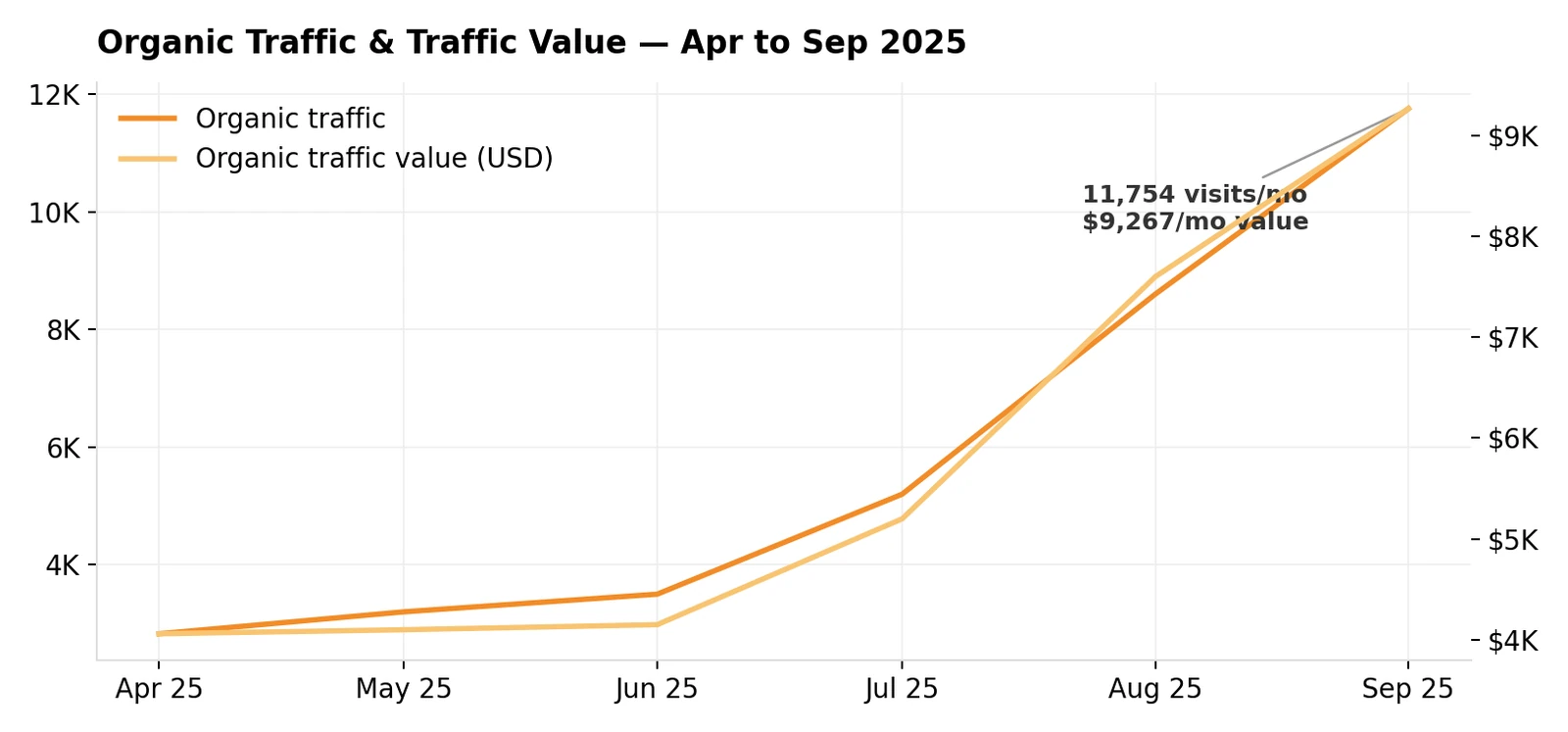
Monthly organic visits went from 2,827 to 11,754, and page-one keywords from 414 to 1,625.
GoldenMonk · 9 months
Link-building work11,754 monthly organic visits
- Who
- An American kratom store with 414 page-one keywords.
- What we did
- 150 links, about $267 each, pointed at pages already ranking in positions 11 to 50.
- Monthly organic visits
- 2,827 to 11,754
- Page-one keywords
- 414 to 1,625
Before and after
| Metric | Before (first month) | After (last month) | Change |
|---|---|---|---|
| Monthly organic visits | 2,827 | 11,754 | +316% |
| Ahrefs traffic value, a month | $4,060 | $9,267 | +128% |
| Monthly search impressions | 16,130 | 165,930 | +929% |
| Ranking keywords (top 50) | 1,862 | 4,767 | +156% |
| Keywords in positions 1–3 | 169 | 536 | +217% |
| Keywords in positions 4–10 | 245 | 1,089 | +344% |
| Page-one keywords | 414 | 1,625 | +293% |
Source: Ahrefs Site Explorer, Apr – Sep 2025.
Traffic value is Ahrefs' estimate of what the same clicks would cost in Google Ads, not revenue.
The brief
A known brand living off its own name
The engagement
| Detail | GoldenMonk |
|---|---|
| Client | GoldenMonk (goldenmonk.com) |
| Industry | Kratom, selling online |
| Service | Link building |
| Engagement | 9 months |
| Budget | $40,000 (about $4,444 a month) |
| Links built | 150 (about 17 a month, about $267 each) |
| Starting point | 2,827 monthly organic visits, 1,862 keywords in the top 50, 414 on page one |
| Source | Ahrefs Site Explorer, Apr – Sep 2025 |
The challenge
GoldenMonk sells lab-tested kratom powders and capsules online. Google Ads and Meta block kratom ads, and the searches it wanted were held by a few long-established vendors and review sites.
At the start it had 1,862 keywords in the top 50 but only 414 on page one, and much of its traffic came from people who already knew the name. The job was to reach shoppers who didn't, on a $40,000 budget.
What we did
How we spent 150 links
Fewer, stronger links, aimed at pages that were already close to page one.
-
Stronger sites over more links
At about $267 a link, placements ran on sites with more authority than a high-volume campaign could pay for.
-
Pages close to page one
Links went almost only to pages already ranking in positions 11 to 50, where extra authority turns into page-one rankings fastest.
-
Product and category anchors
Anchors led with product and category terms such as kratom capsules, kratom powder and strain names, with brand-name anchors to keep the mix natural.
-
No pause for a core update
When a Google core update landed in June 2025, links kept going in at the same pace.
-
Logged and checked
On this engagement, every link was logged in the shared tracker with its target page and keyword group, and checked live in the published article.
Rankings
Where the new rankings came from
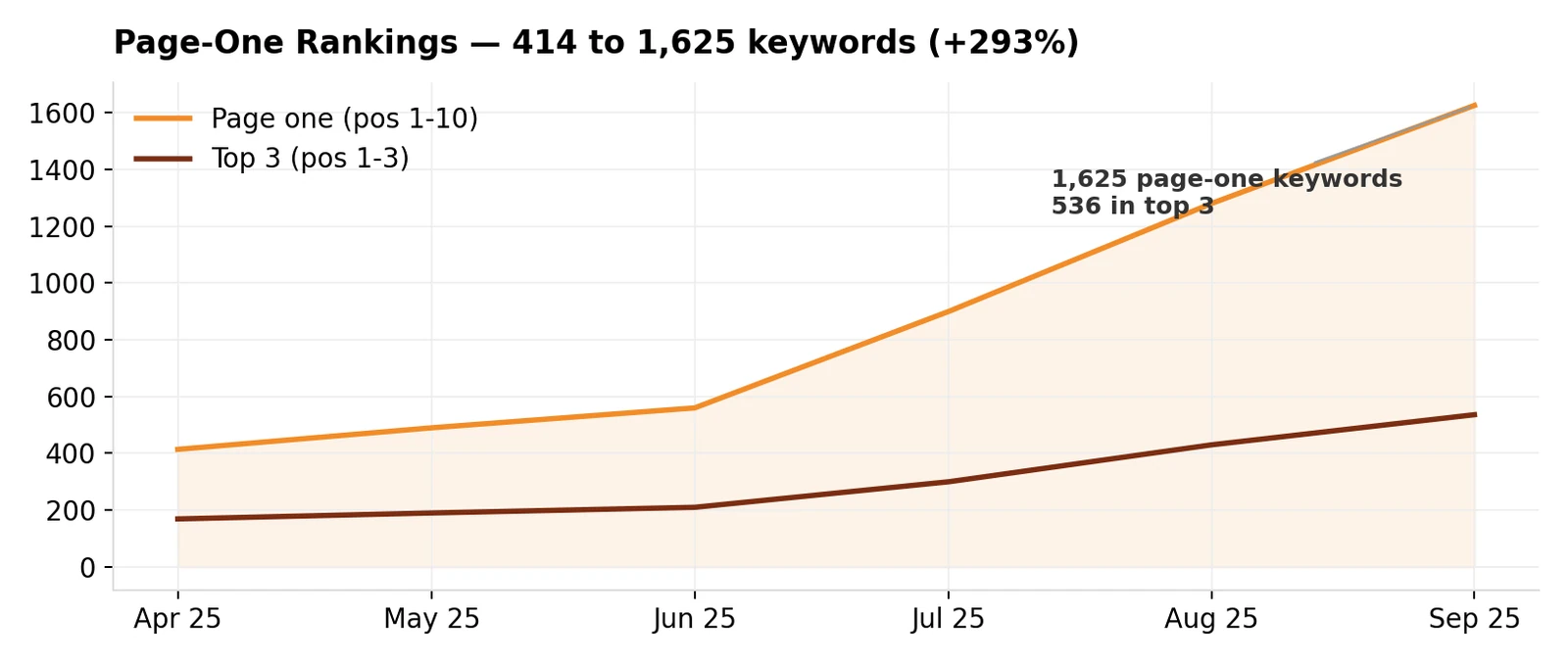
Keywords in the top 50 went from 1,862 to 4,767. Most of the movement was onto page one.
Page one nearly quadrupled
Page-one keywords went from 414 to 1,625. Keywords in positions 4 to 10 went from 245 to 1,089, and the top three from 169 to 536.
The steepest part of the climb came in the second half of the data window.
More visits from buying searches
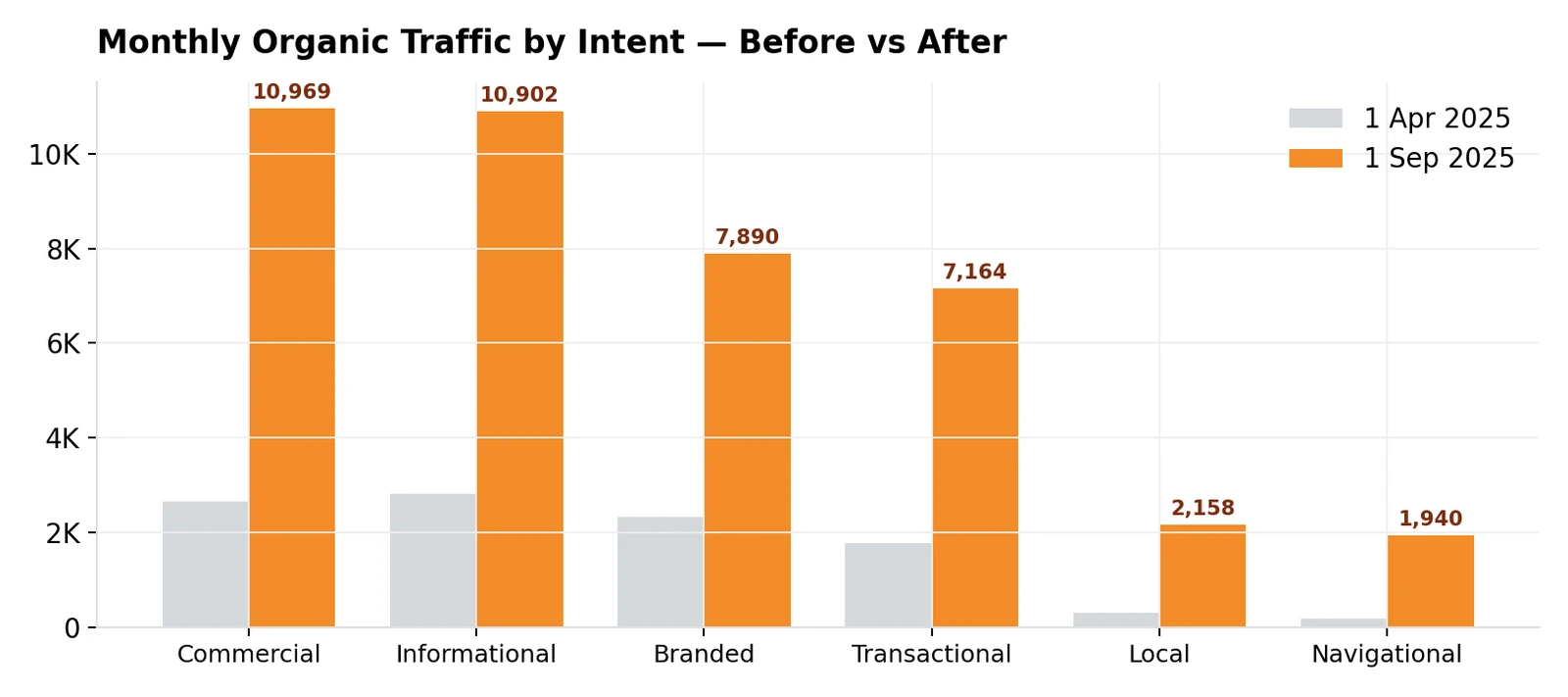
At the end of the window, Ahrefs counted 10,969 monthly visits from commercial searches and 7,164 from transactional ones, up from 2,661 and 1,774.
Ahrefs puts some visits in more than one group, so these figures overlap and don't add up to total traffic.
Cost per result
What each result cost
Plain division: the $40,000 budget divided by each gain.
per new page-one keyword
The $40,000 budget divided by the 1,211 keywords that reached page one. The table below does the same division for the other results.
Cost per result
| Result | Gain | Cost |
|---|---|---|
| Page-one keywords | +1,211 | $33 per page-one keyword |
| Monthly organic visits | +8,927 | $4.48 per monthly visit |
| Keywords in positions 1–3 | +367 | $109 per top-3 keyword |
| Ranking keywords (top 50) | +2,905 | $14 per ranking keyword |
Budget divided by gain. Source: Ahrefs Site Explorer, Apr – Sep 2025.
About traffic value
Ahrefs put GoldenMonk's traffic value at $4,060 a month at the start and $9,267 at the end. That's Ahrefs' estimate of what the same clicks would cost in Google Ads, not revenue.
We don't have GoldenMonk's sales figures, so this page doesn't claim any.
Takeaways
What other kratom brands can take from this
-
Aim links at pages close to page one
Links went to pages already ranking in positions 11 to 50, and keywords in positions 4 to 10 went from 245 to 1,089.
-
A few strong links can be enough
150 links at about $267 each took monthly organic visits from 2,827 to 11,754.
-
Keep going through core updates
Links kept going in when a Google core update landed in June 2025, and the rankings kept climbing after it.
-
Reach people who don't know you yet
Visits from commercial searches went from 2,661 to 10,969, so the growth wasn't only people searching for GoldenMonk by name.
Scope
What this study covers, and what it doesn't
This was link building only
GoldenMonk hired us for links, not a full SEO program. Every figure on this page comes from that link work, measured in Ahrefs.
What a full program adds
A full kratom program adds work on the site itself: product pages written without health claims, technical fixes, and monthly checks of what AI answers say about you.
Our Kratom SEO service covers that program. AI search visibility covers the AI side, and editorial link building is the service this study used. See our packages and prices.
More case studies
More link building results
-
Exhale Wellness · Delta-8 brand
- Monthly organic visits 0 → 204,602
800 links over 9 months. Read the Exhale Wellness case study
-
BudPop · Delta-8 brand
- Ranking keywords 3,147 → 13,902
450 links over 13 months. Read the BudPop case study
-
Hypno Seeds · Online seed bank
- Monthly organic visits 2,541 → 24,509
120 links over 12 months. Read the Hypno Seeds case study
Book a call
Book a 30-minute call about your kratom brand's link building
We'll look at your link profile and the pages that are close to page one, and tell you what a plan like this one would look like for your store. Pick a time that suits you.
30-minute strategy call
With Khushboo Gairola, Founder
- Which pages are closest to page one
- What a realistic pace and budget look like
- Which package fits, and what it includes
Prefer a written audit first? Get a free audit
Rather email? sara@cbdseoxperts.com or khushboo@cbdseoxperts.com